
Category: Salary & Compensation
-
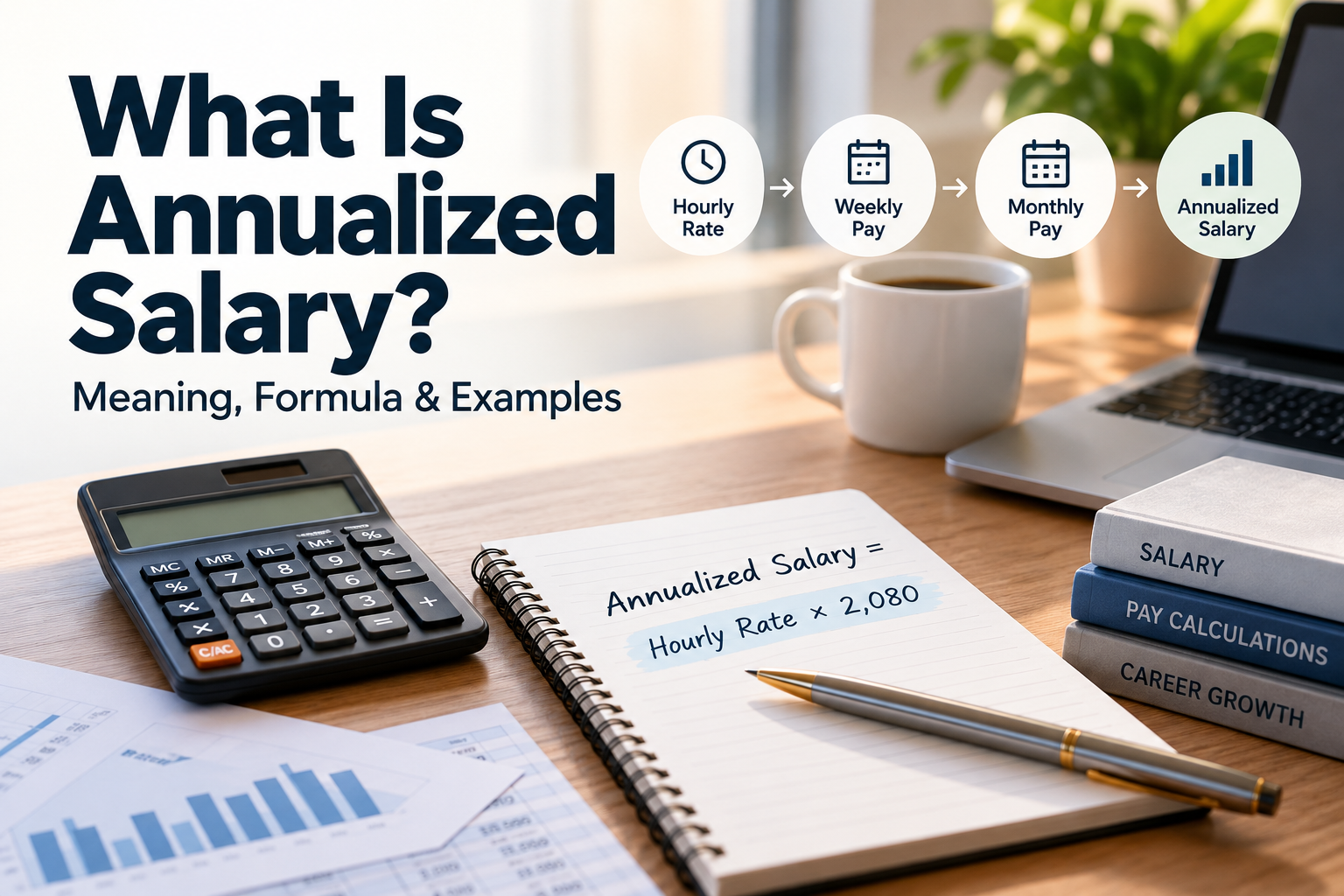
What Is an Annualized Salary? Meaning, Formula & Examples
Annualized salary is the amount of pay a worker would earn over a full year if their current pay rate and work schedule continued for that year. It is a way to express hourly, weekly, biweekly, monthly, part-time or partial-year pay as a yearly figure so different compensation arrangements can…
-

What Is a 4% Raise? Hourly, Monthly & Annual Pay Examples
A 4% raise means your current pay increases by 4%. For a $65,000 salary, that adds $2,600 per year and raises your salary to $67,600. For an hourly worker earning $25 per hour, a 4% raise adds $1 per hour, bringing the new rate to $26 per hour. Below, you…
-

Average Promotion Salary Increase in 2026: What Raise Should You Expect?
See the average promotion salary increase in 2026, how promotion raises compare with merit increases, and what 5%, 8.7%, 10% and 15% raises mean in dollars.
-

What Is a Good Raise Percentage in 2026? Average Pay Raise Explained
What is a good raise percentage in 2026? Compare average pay raises, merit increases, promotion raises, inflation and real salary growth with practical examples.
-

What Is a Merit Raise? How It Works, Typical Percentage & Examples
Learn what a merit raise is, how it differs from a cost-of-living adjustment, how merit increases are calculated, and what common raise percentages mean for your pay.
-

What Is a 3% Raise? Salary Examples & Monthly Pay Increase
See what a 3% raise adds to annual, monthly, biweekly, weekly, and hourly pay with simple salary examples and inflation-adjusted context.
-

What Is a 5% Raise? Salary Examples & Monthly Pay Increase
See exactly what a 5% raise adds to annual, monthly, biweekly, weekly, and hourly pay with simple salary examples.
-

How to Calculate Salary Increase Percentage (With Examples)
Learn how to calculate a salary increase percentage using a simple formula, with worked examples for 3%, 5%, 7%, and 10% raises.