
Category: Salary & Compensation
-
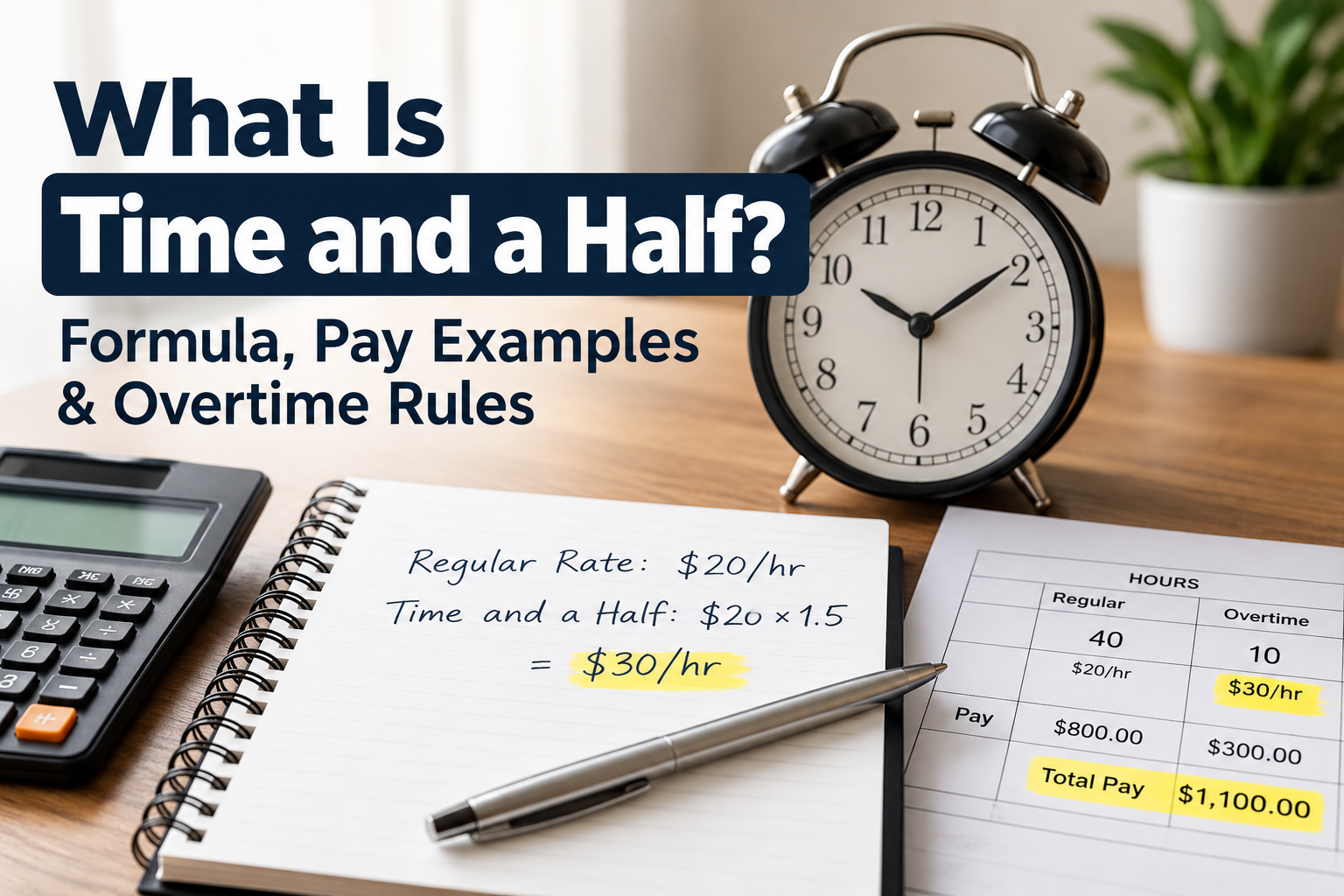
What Is Time and a Half? Formula, Pay Examples & Overtime Rules
Time and a half means being paid 1.5 times your regular rate of pay for qualifying overtime hours. If your regular rate is $20 per hour, your time-and-a-half rate is $30 per hour. Under the federal Fair Labor Standards Act (FLSA), covered nonexempt employees generally must receive overtime pay at…
-

Overtime Pay for Salaried Employees: Rules, Eligibility & Examples
Overtime pay for salaried employees depends on whether the employee is legally exempt or nonexempt under the Fair Labor Standards Act (FLSA) and any applicable state law. Being paid a salary does not automatically mean an employee is exempt from overtime. Under the federal FLSA, covered nonexempt employees generally must…
-

What Is FIT on a Pay Stub? Federal Income Tax Withholding Explained
FIT on a pay stub usually means Federal Income Tax withholding. It is the amount your employer withholds from your paycheck and sends to the IRS toward your federal income tax. Depending on the payroll system, the same deduction may appear as FIT, FITW, FWT, Federal Tax, Fed Withholding, or…
-

What Is a Pay Stub? How to Read Earnings, Taxes & Deductions
A pay stub is the earnings statement that explains how an employee’s paycheck was calculated. It usually shows the pay period, hours or salary used, gross pay, taxes, deductions, net pay, and year-to-date totals. In simple terms, your paycheck tells you how much you received; your pay stub explains how…
-

What Does YTD Mean on a Pay Stub? Gross Pay, Taxes & Examples
YTD on a pay stub means “year-to-date.” It shows the running total of an earnings, tax or deduction amount from the beginning of the calendar year through the current paycheck. In other words, the “current” column tells you what happened on this paycheck, while the “YTD” column tells you how…
-

How Many Hours Is a Part-Time Job? Weekly Hours, Pay & Salary Examples
There is no single federal rule that defines exactly how many hours make a job part-time. Under the Fair Labor Standards Act, full-time and part-time status is generally a matter for the employer, while other programs and statistical systems can use their own hour thresholds. That means the same 30-…
-

What Is a Pay Period? Weekly, Biweekly & Semimonthly Pay Explained
A pay period is the recurring span of time during which you earn wages that will be included in a paycheck. It has a start date and an end date. Your employer then processes those earnings and pays them on a scheduled payday, which may be several days after the…
-

What Is Gross Pay? Gross vs Net Pay, Formula & Examples
Gross pay is the total amount you earn from an employer before taxes, benefits, retirement contributions and other payroll deductions are taken out. It is the starting amount on a paycheck. The amount that remains after deductions is your net pay, also called take-home pay. For an hourly worker, gross…
-

What Is Annual Income? Gross vs Net, Formula & Examples
Annual income is the total income you receive or expect to receive over a 12-month period. Depending on the context, it may refer to your gross income before taxes and deductions or your net income after those deductions. For employees, annual income usually starts with salary or wages, then may…
-

Salary Increase Request Letter: How to Ask for a Raise + Examples
A salary increase request letter is a professional message an employee sends to ask for a pay raise and explain why the request is justified. The strongest letters are specific: they state what has changed, show measurable contributions, make a clear request, and invite a conversation rather than relying on…